Amir Rrahmani Is Napoli’s Most Important Defender. His Body Is Running Out of Time
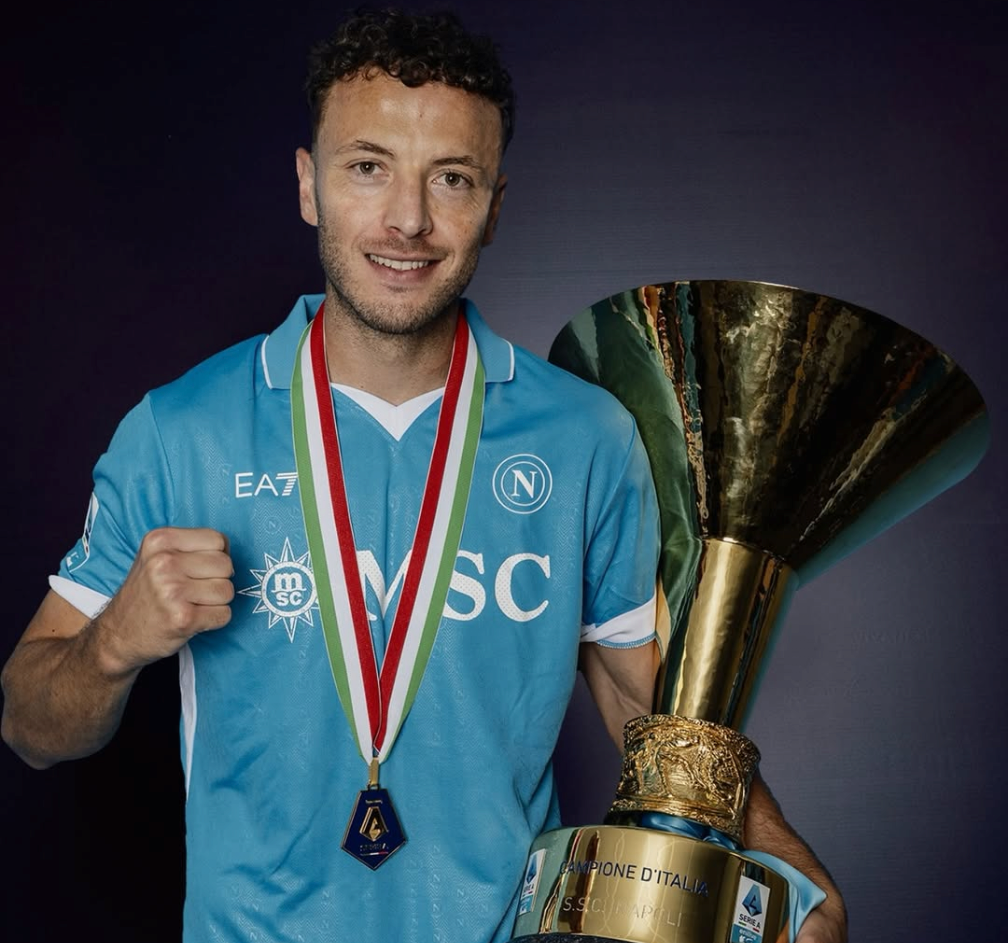
Antonio Conte built Napoli’s 2024-25 Serie A title around one specific defensive partnership. Rrahmani on the right side of the back four, reading the game and stepping into midfield when required. Buongiorno on the left, aggressive in the duel and dominant in the air. Everything else in the Napoli structure — the midfield compactness, the full-back inversions, the safety net behind Scott McTominay’s forward runs — was calibrated around those two players being available every week.
Rrahmani is 32 years old. He has spent the 2025-26 season either injured or recovering from injury, and the pattern is no longer a coincidence.
The numbers tell the story directly. A muscular injury during the September international break with Kosovo ruled him out for the first stretch of the season. He returned in October, started six consecutive matches, and performed at a level that reminded anyone paying attention why Napoli’s defensive record collapses when he is not on the pitch. Then another muscle injury in late January. Then, in February 2026, a high-grade lesion of the left biceps femoris — the same muscle group that has caused his two previous absences this season — that ruled him out for two to three months.
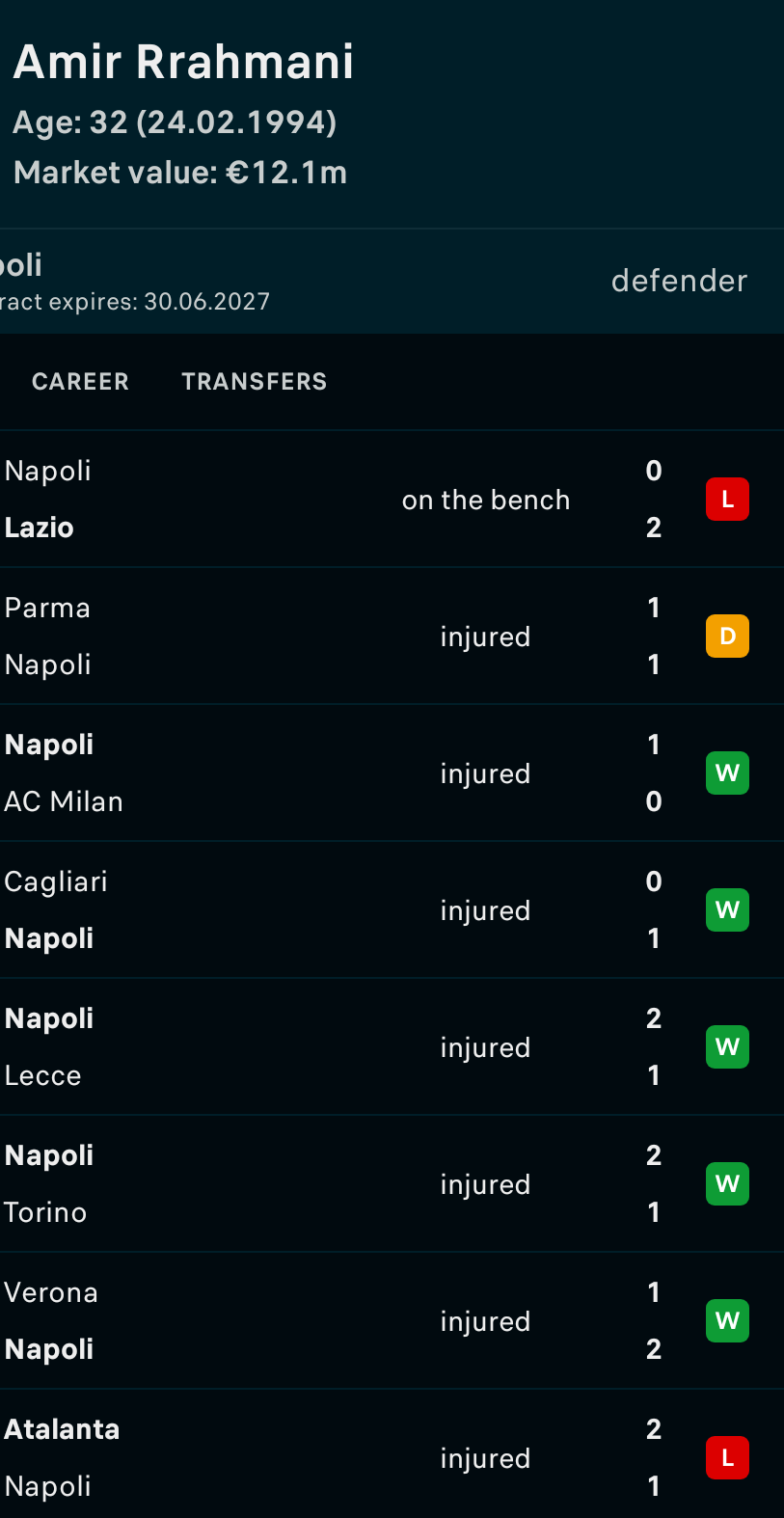
Three muscular injuries in a single season, all affecting the same area. This is not bad luck. This is a body telling a coaching staff something specific.
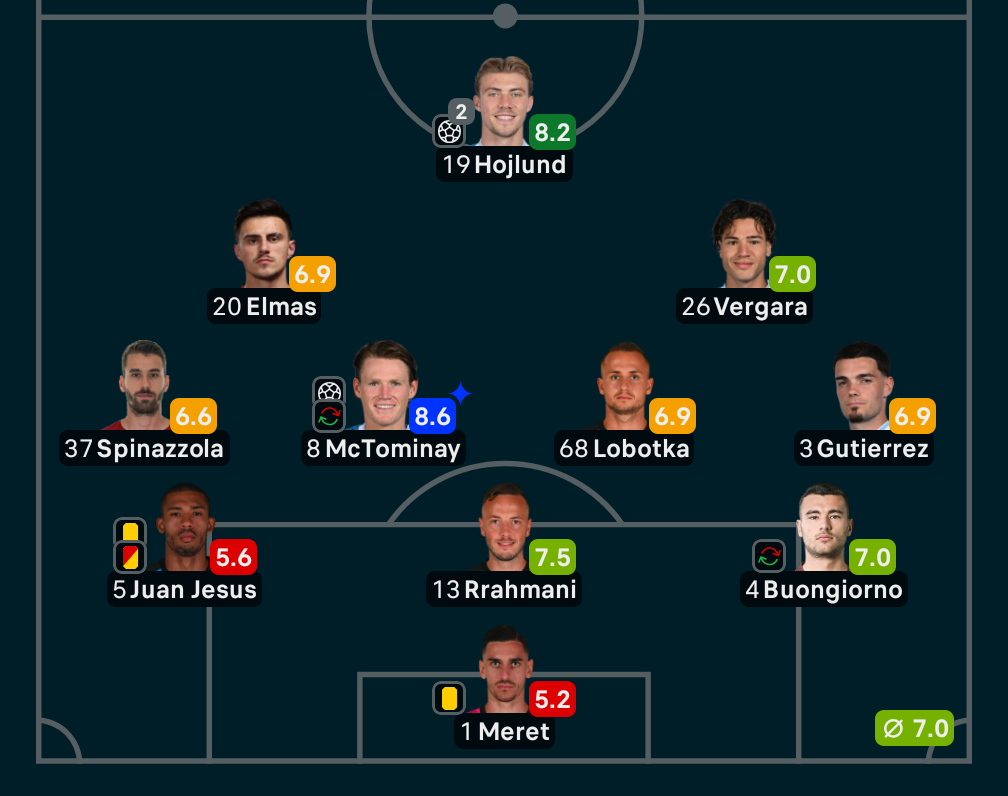
Rrahmani’s value to this Napoli team is genuine and measurable. Across his nine Serie A starts this season, he posted a FotMob rating of 7.27 — one of the highest averages of any center-back in the division. In those nine matches, Napoli kept five clean sheets. The defensive metrics are not close. Rrahmani steps into midfield to break up opposition build-up phases better than any other option Conte has available. He clears the ball without panic. He reads the line of the last defender with a kind of spatial intelligence that the younger center-backs on the Napoli roster — Beukema, Buongiorno when fit — have not yet developed.
Amir Rrahmani is the Player of the Year 🌟
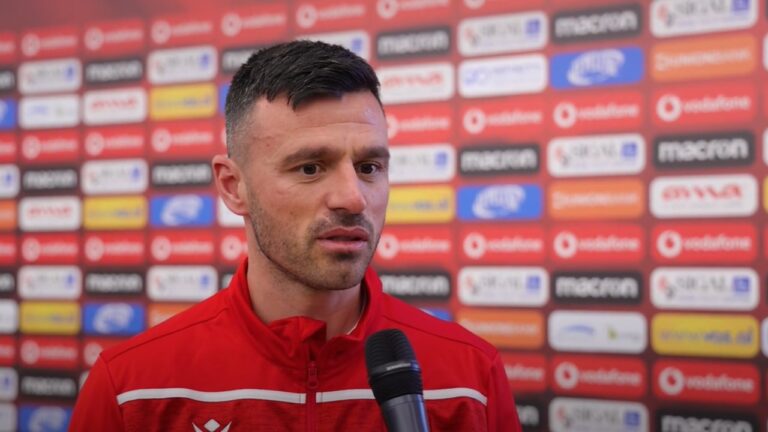
Napoli defender and Kosovo captain Amir Rrahmani has been awarded the “Fadil Vokrri” award by the Football Federation.
Congratulations! 👏 pic.twitter.com/3yet8Ck9K4
— Kosovo Football 🇽🇰 (@FootballKosovo) December 21, 2025
The problem is he cannot stay on the pitch.
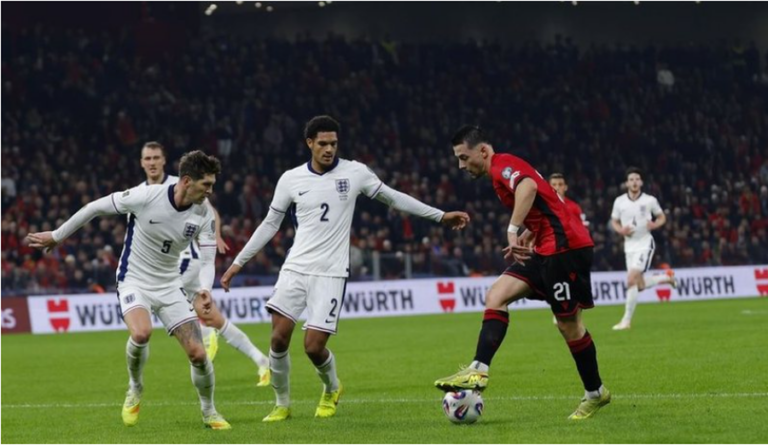
What makes this analysis complicated is the international dimension. Rrahmani is the captain of Kosovo, a player whose leadership at international level is tied directly to the national team’s tactical identity. Every September, November, and March, he adds another competitive window onto a body that Napoli’s medical staff are increasingly worried about. Kosovo need him. Napoli need him. His body, at 32, is struggling to service both demands simultaneously.
This is not a unique problem in modern football. Elite center-backs across Europe are running into the same wall — the physical demands of club football combined with international duty compress recovery windows to the point where soft tissue injuries become structurally inevitable. What makes Rrahmani’s case particularly sharp is that Napoli do not have a replacement. Beukema, signed in the summer of 2025, is solid but not at Rrahmani’s level. Juan Jesus is a rotation option, not a starter in a title-contending structure. When Rrahmani misses matches, the drop-off is not a degree. It is a category.
Conte has two options, and both are uncomfortable. He can continue building the system around Rrahmani and accept that the player will miss twelve to fifteen matches per season, hoping the timing works out across Serie A and Champions League windows. Or he can accept that the 32-year-old version of Rrahmani is no longer an every-week starter and rebuild the defensive structure around a more durable, if less tactically intelligent, partnership.
Neither option is attractive. The first one is what Napoli are doing currently, and it has already cost them results. The second one requires admitting that the defender who was central to the 2024-25 title win cannot be central to defending it.
For Kosovo, the stakes are different but no less urgent. Rrahmani is the single most important figure in the national team’s tactical structure. Without him, Kosovo lose not just a defender but the organizational voice that holds the back four together in high-pressure qualifying matches. The country’s football federation has a difficult conversation approaching — how to reduce Rrahmani’s international workload without undermining a generation’s best chance of qualifying for a major tournament.
The uncomfortable truth about Rrahmani’s 2025-26 season is that it looks like the beginning of a specific career phase rather than a temporary setback. The pattern of muscle injuries clustered around the same area, combined with his age and workload, suggests his peak availability years are behind him. The quality, when he plays, remains elite. The frequency of availability is dropping.
Napoli’s 2025-26 title defense may already have been decided by this dynamic. With Rrahmani on the pitch, they remain one of the two most structurally sound teams in Italy. Without him, they are vulnerable in the exact areas that cost teams Serie A titles in April and May.
The question for Conte is not whether Rrahmani is still a great center-back. He is. The question is whether Napoli can afford to build a title defense around a player whose body is now actively resisting the demands his role requires.
The answer, based on what the 2025-26 season has shown so far, is increasingly clear.