Albania Reached Their First World Cup Playoff and Threw It Away in 45 Minutes
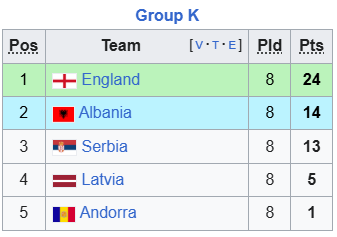
Albania had never been here before. A World Cup playoff, earned through a qualifying campaign that produced four wins, two draws, and a historic 1-0 victory in Andorra that sent the entire country into the streets.
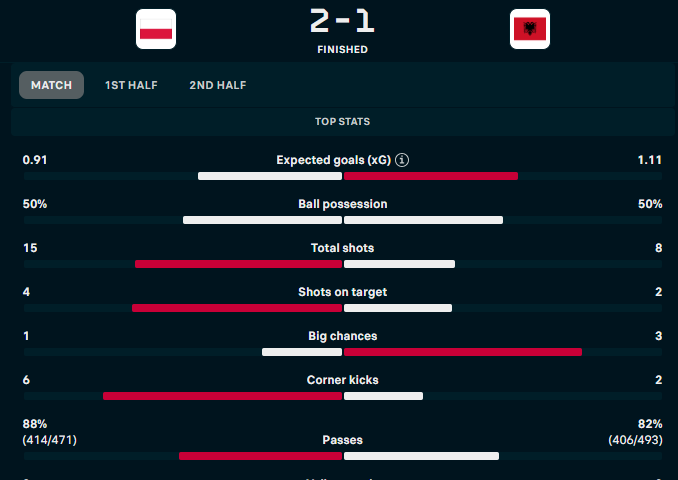
For a nation that has spent most of its football history as a footnote in other teams’ qualification stories, March 26, 2026 in Warsaw was supposed to be the night everything changed. It ended 2-1 to Poland. Albania led at halftime.
That sequence — taking the lead, controlling the first half, then losing the match in the second — is not a one-off. It is a pattern that has defined Albanian football under Sylvinho for two years, and the Poland defeat brought it into focus more sharply than any previous result. Albania are genuinely capable of competing with better teams for 45 minutes. They have not yet developed the tactical tools to hold a result when the opposition adapts.
The first half in Warsaw was everything Albanian football has been building toward. Kristjan Asllani, operating as the deepest midfielder in a compact 4-4-2 mid-block, controlled the tempo with the kind of composed distribution that made Inter Milan pay attention to him in the first place. Albania pressed Poland’s build-up at specific triggers, denied them rhythm, and scored from exactly the kind of set-piece situation that has been their primary attacking weapon throughout the qualifying campaign. One-nil. Historic.
Then Poland made one tactical adjustment at halftime, and Albania had no answer.
Robert Lewandowski dropped deeper in the second half, pulling Berat Djimsiti out of his defensive line and creating space behind him for the Polish wide players to run into. This is not a new problem for Albania. Any team with a mobile striker who is willing to work off the ball can drag Djimsiti into uncomfortable positions, because his instinct is always to follow the runner rather than hold his structure and trust the midfield to cover. Against lower-ranked opposition in qualifying, that instinct did not cost points. Against Poland, with Lewandowski specifically designed to exploit it, the cost was immediate.
🚨 LEWANDOWSKI SCORES THE EQUALIZER AGAINST ALBANIA! pic.twitter.com/6SvS20bVPc
— Barça Universal (@BarcaUniversal) March 26, 2026
The equalizer came from precisely this sequence. The second goal — the one that ended Albania’s World Cup dream — came from a transition phase after Albania committed too many bodies forward in search of a winner they did not need to chase. Leading 1-0 with twenty minutes left against Poland in Warsaw, Sylvinho’s team should have been managing the game from a deep, compact shape. Instead they pushed higher, left space in behind, and were punished exactly as any technically superior team would punish that decision.
I have watched Albania’s qualifying campaign in full. The defensive structure in the first sixty minutes of most matches is genuinely impressive — organized, physically committed, difficult to break down. The problem is consistent and specific: when Albania concede, or when they need to protect a lead against sustained pressure, the structure collapses. The mid-block that works so well in the first half becomes a reactive scramble in the second. The pressing triggers that fire correctly when fresh become mistimed and exploitable when fatigued.
This is a fitness problem as much as a tactical one. Albania do not have the squad depth to rotate meaningfully across a qualifying campaign. The same eleven players who start every match are also the same eleven players running on empty in the final twenty minutes of high-pressure games. Asllani received a booking in the 88th minute against Poland — a player of his intelligence picking up a late yellow card is almost always a sign of accumulated fatigue affecting his decision-making, not a lapse in concentration.
The defeat hurts because the margin was so small. One tactical adjustment held for twenty minutes would have been enough. Albania did not need to outplay Poland over ninety minutes. They needed to manage what they already had. That specific failure — the inability to close out a result when the game is in hand — is the single most important problem Sylvinho must solve before the next qualifying cycle begins.
The players are good enough. The structure in the first half against Poland proved that beyond any reasonable doubt. But good enough for forty-five minutes, against this level of opposition, is not the same as good enough to qualify for a World Cup.
That gap still exists. It will not close by itself.